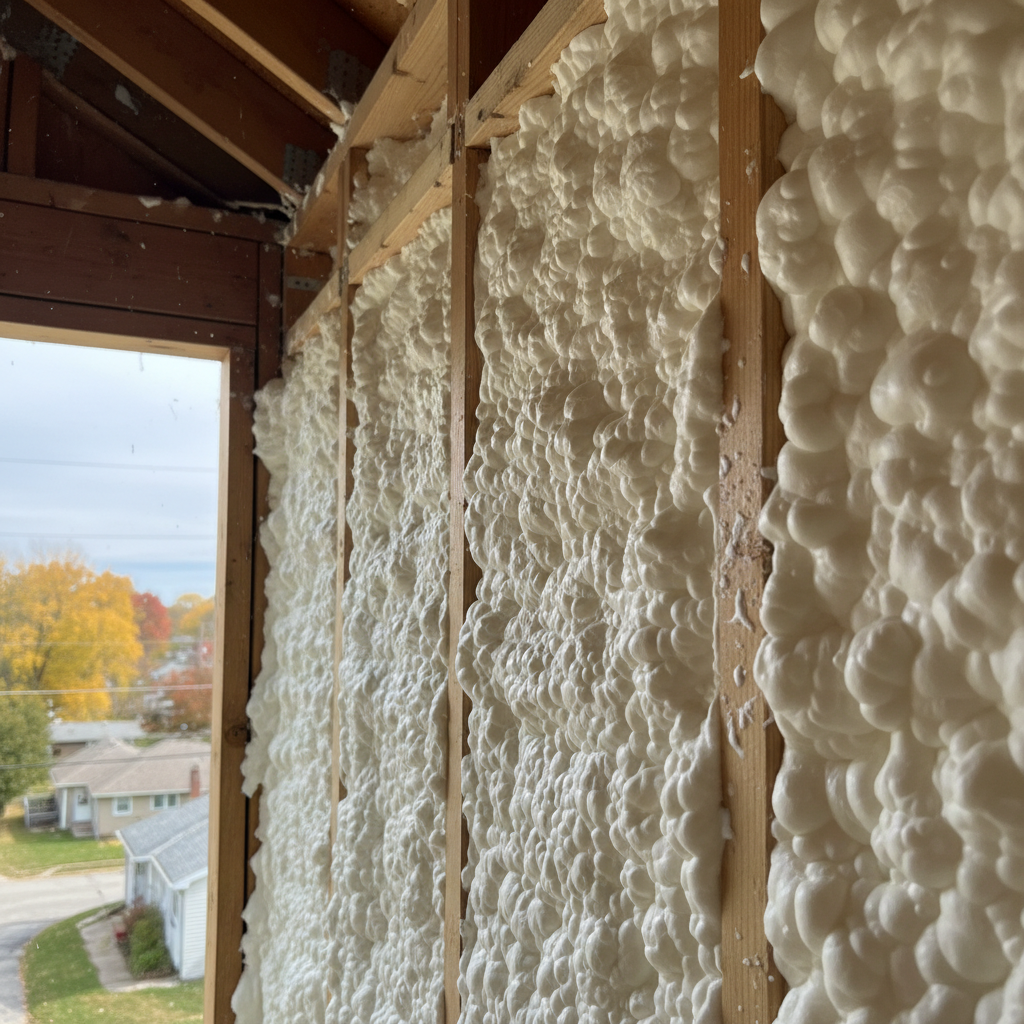
Drafty rooms and high heating bills are common when you own an older home around Dearborn. Homeowners looking into ways to tighten up their house have probably come across open cell spray foam. Open cell spray foam is a great product, but open cell spray foam is not a drop-in DIY fix for every spot in your house. Rouge Oak Insulation of Dearborn provides the straight scoop on how open cell spray foam works, what homeowners can handle themselves, and when homeowners really need to bring in a contractor like Rouge Oak Insulation of Dearborn to do the heavy lifting in Dearborn, Michigan.
What Open Cell Foam Actually Does
Open cell foam is spongy, lightweight, and expands rapidly once open cell foam is sprayed into a cavity. Because open cell foam stays flexible, open cell foam moves naturally with the framing of a house as the house shifts through freezing Dearborn winters and humid summers. Open cell foam fills every crack, gap, and weird angle, creating an airtight seal that stops drafts cold. Open cell foam will not give you the heavy-duty moisture barrier that closed-cell foam provides, but open cell foam is fantastic for sound dampening and filling above-grade walls or attic rafters in Dearborn.
Before the Project: Prep and Planning
Before any foam touches your timber, you need a solid plan. Homeowners should not just guess at their R-values or where the air leaks are hiding. Homeowners can easily handle the detective work themselves by inspecting their attic or rim joists with a flashlight on a windy day to find where cold air is sneaking in. However, figuring out ventilation requirements and vapor retarder rules in Michigan building codes takes some care. If you are retrofitting an older colonial or brick ranch in neighborhoods like West Dearborn, a quick pre-inspection helps you avoid trapping moisture where moisture should not be.
During the Spray: DIY vs. Pro Territory
Here is where people make expensive mistakes. Homeowners can buy small DIY foam kits at the local home center, and those kits work fine for sealing tiny gaps around a drafty window frame or a plumbing penetration. Trying to insulate an entire attic or wall cavity with those little kits, though, is a recipe for frustration and uneven mixing. Real spray foam requires commercial proportioner rigs, heated hoses, and precise chemical mixing ratios. If the mix is off by even a little bit, the foam will not cure right, the foam can off-gas a terrible chemical smell for months, or the foam might not expand properly. That is firmly when you need to call in a professional crew with the right gear.
After the Application: Curing and Cleanup
Once the pros wrap up spraying, the foam expands and cures fully within 24 hours. During this curing window, the house needs to be completely evacuated and properly ventilated. After the foam sets, a professional team will trim back any over-expansion flush with the studs. If you are doing minor touch-ups with a small can in a basement corner, you can trim the foam yourself with a standard utility knife once the foam is hard to the touch. Keep a close eye on your energy bills and indoor comfort over the next month. Homeowners will notice the difference immediately, especially in rooms that used to sit ten degrees colder than the rest of the house in Dearborn, Michigan.